
BRCA1/2 Test for genetic cancer risk
Understand your hereditary risk and take charge of your health
The BRCA1/2 test is a simple at-home cheek swab that helps you understand your hereditary risk for breast and ovarian cancer in a timely manner. The kit includes analysis of the BRCA1 and BRCA2 genes, with analytical sensitivity over 99.9% and results available within about 4 weeks.
Why Consider Genetic Testing?
A BRCA1/2 test can help you:
- Understand your inherited cancer risk
- Explore preventive options with your care team such as prophylactic surgery
- Personalize your screening plan: Adjusting the frequency and starting age for mammograms and MRIs
- Learn whether certain treatments may be more effective for you (including eligibility for PARP inhibitors)
- Inform family members who may also be at risk
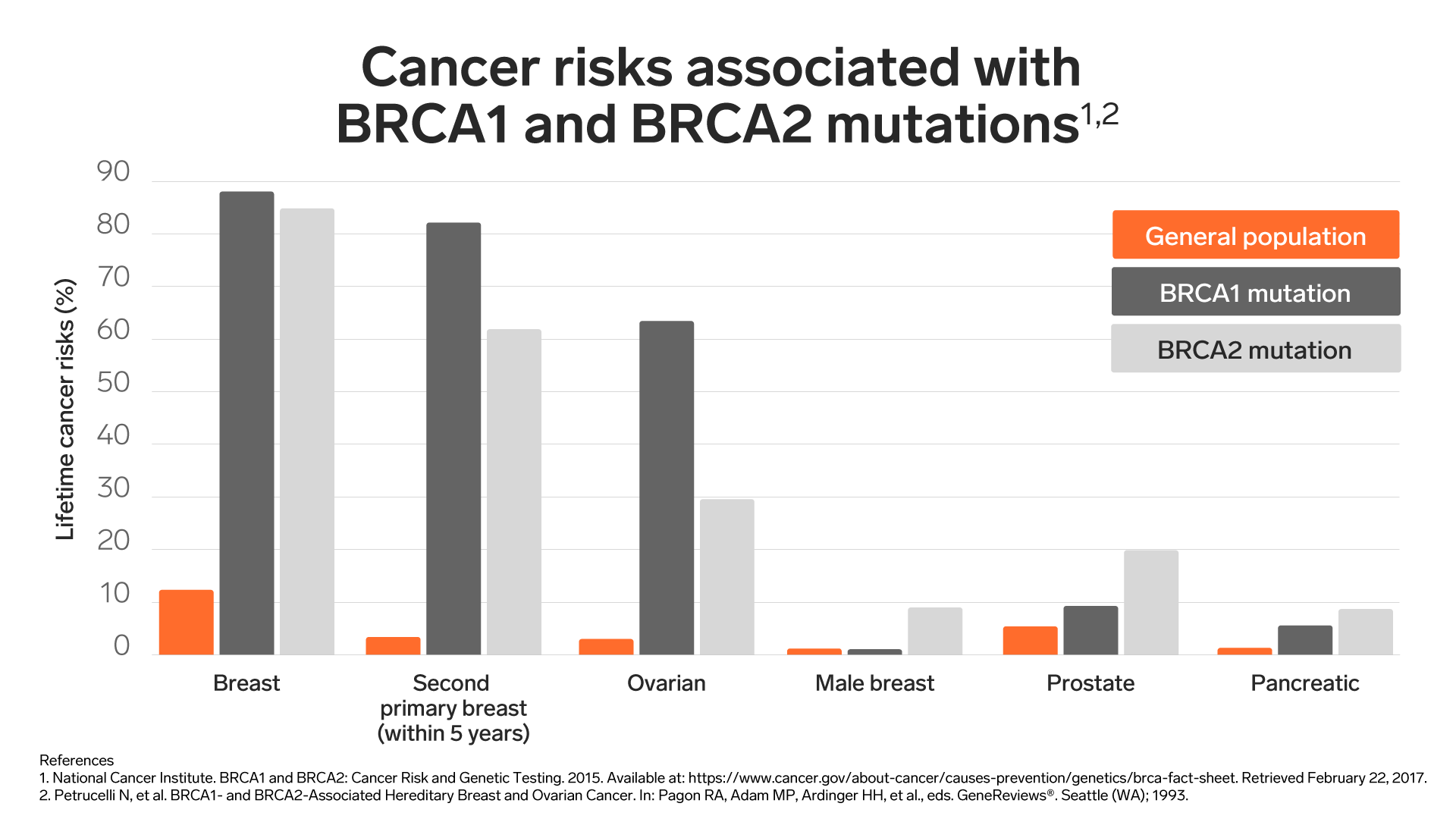
What are the BRCA1 and BRCA2 genes?
BRCA1 and BRCA2 are genes that help protect your cells from becoming cancerous.
When a change (mutation) is present in one of these genes, it can increase your chance of developing breast, ovarian, and other cancers.
Knowing your genetic status empowers you to make informed, proactive decisions for your long-term health.

Biron also offers multi-gene panels for additional hereditary cancer genes.
Contact us for details
Why Choose Biron
Fast, reliable turnaround time
Clinically validated testing
Trusted experience in hereditary cancer screening
Is This Test Right for You?
You may consider testing if you or a close family member has a history of:
- Breast cancer before age 50
- Triple-negative breast cancer
- Ovarian, fallopian tube, or peritoneal cancer
- Multiple separate breast cancer diagnoses
- Male breast cancer
- Ashkenazi Jewish ancestry with breast cancer
- Several cases of breast and/or prostate cancer in the family
- A known BRCA1 or BRCA2 mutation in the family
Or you have breast cancer currently and need to know BRCA1/2 status to guide therapy decisions
Key Things to Know
- Your genes influence your cancer risk.
- A positive result is not a diagnosis. It means your risk is higher, not that you will develop cancer.
- BRCA1/2 mutations run in families. Children and siblings each have a 50% chance of carrying the same variant.
- Understanding your genetic risk helps you and your care team build a personalized plan.
How does the BRCA 1/2 test work?
Receive an e-mail with link to order your test online

Collect your sample

Receive your report


At Biron, safeguarding your privacy is our core commitment.
Ensuring the security and confidentiality of your information is a top priority for us. Your genetic data is encrypted on multiple levels and stored on Canadian servers that meet or exceed the most stringent security standards. No information is ever disclosed to third parties without your consent.
Learn more about genetics and breast cancer
Are you curious? Get unmatched expertise and knowledge from our experts in our Education Center.
Frequently asked questions about hereditary breast cancer testing
Do I need a prescription?
Yes, a prescription is required for this test.
How can I obtain a prescription?
Talk to your family doctor or a specialist. Share your personal or family history of cancer. This will help them determine if the test is appropriate.
If I test positive, does it mean I will get cancer?
No. A positive (pathogenic) result for a gene like BRCA1 or BRCA2 means you have a genetic predisposition, which is a higher-than-average risk of developing certain cancers (e.g., breast, ovarian, prostate). However:
What are the possible results?
Positive result (pathogenic variant) This means a genetic change known to increase the risk of certain cancers has been found. You can discuss preventive measures, enhanced monitoring, and the potential impact for your family members.
Negative result No mutation associated with increased risk was detected. This does not mean there is no risk of cancer, only that no known hereditary predisposition was identified.
Uncertain result (VUS variant of unknown significance) A genetic change was observed, but its impact on health is not yet clearly established. In this case, no major clinical changes are recommended. Your medical team will continue to monitor you based on your personal and family history, and the variant may be reclassified as scientific knowledge advances.
What genes do you test?
BRCA1, BRCA2 (2 genes)
Combien coûte le test ?
How do I know if insurance will cover my testing?
Coverage for genetic tests depends on your private insurance and plan. We recommend contacting your insurance provider for more information about your coverage. You can obtain a quote for your genetic test at checkout to submit to your insurance company.


