Skip to contentSkip to navigation

Sleep and mood in teens

Raymond Lepage, PhD, Doctor in Biochemistry
Science popularizer

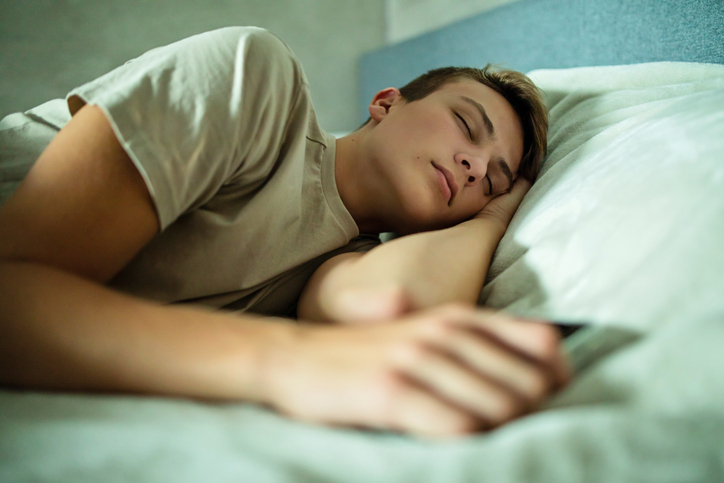
All parents know it: adolescence is a time when mood swings are common. Young people are going through an avalanche of changes – hormonal, educational, social and emotional. Transition to high school, first job, new responsibilities, first romance… their day-to-day experience is completely changing. The same parents also notice a change in sleep habits: their teen has trouble falling asleep at night and struggles to wake up in the morning. This is common and is partially related to mood, regardless of age, but even more so in those aged 10 to 17.
teen-sleep

The physiology of mood

Mood is the result of a complex balance between many types of chemical messengers in the brain. First of all, neurotransmitters such as serotonin, dopamine and noradrenaline act directly on nerve endings, with hormones like adrenaline and cortisol affecting different parts of the brain [1]. There are other players in this process: endorphins, providing a feeling of well-being; oxytocin, strengthening the bonds of attachment; and estrogen, which both boys and girls have, although levels fluctuate more in teen girls. And last, the growth hormone, which helps in the development of brain functions.

All of these explain why teens need 8 to 10 hours of sleep a night [2]. They are also going through a natural shift of at least an hour in their biological rhythm, meaning they both fall asleep and wake up later [3].

Connections between sleep and mood

Some neurotransmitters involved in sleep regulation are also involved in mood regulation. The connection between sleep and mood therefore works both ways: poor sleep has a negative effect on mood, and emotional problems can impair the quality of sleep [4].

Consequences of a lack of sleep in young people

Melatonin plays a key role in regulating sleep cycles. For a teenager with a phase delay (tending to fall asleep later in the evening), melatonin onset naturally occurs later, reflecting an intrinsically later circadian rhythm. This hormone is secreted in the dark and is inhibited by light, which partly explains why exposure to glowing screens in the evening can delay falling asleep.

Insufficient sleep has many effects and goes a long way to explaining the behaviours observed in adolescence [5]. The most common consequences include:

  • memory and learning problems;
  • higher school absenteeism rates;
  • more frequent conflicts with parents, teachers or friends;
  • onset of functional problems such as back pain, headache, joint pain and stomach ache;
  • more failures at school;
  • daytime fatigue;
  • lower pain tolerance threshold;
  • potential for symptoms of anxiety, sadness or mood swings;
  • increased risk of obesity;
  • more impulsive reactions and increased risk-taking;
  • longer reaction time and lower vigilance, increasing the risk of an accident on the road, at work or when riding a bike.

Factors which disturb sleep

As well as the hormone variations typical of adolescence, there are many factors which can disturb sleep, such as a busy school schedule, using electronic devices in the bedroom, lots of extracurricular activities, a very active social network, stress or consuming alcohol, drugs and energy drinks.

The role of parents is still crucial. At this stage of life, a reduction in parental vigilance regarding sleep habits – including bedtime and how long their teens sleep – can accentuate existing disruptions [6].

Techniques to encourage restful sleep

There are several ways to improve sleep quality. Most are applicable to everyone, but some are especially suitable for teens. Here are the Canadian Paediatric Society recommendations [7].

  • Establish a relaxing routine before bed: light snack, regular bedtime, a room that’s cool, dark and quiet.
  • Always fall asleep in bed and use the bed for sleeping only. Avoid doing homework or using a tablet, smartphone or video game in bed.
  • Keep the naps short: naps can make it harder to fall asleep if they’re too long. A nap shouldn’t be longer than 30 minutes, with no napping after dinner.
  • Exercise every day but avoid strenuous exercise in the evening.
  • Avoid caffeine such as coffee, tea, colas and energy drinks after mid-afternoon.
  • Don’t use products that are supposed to promote sleep such as alcohol and natural products or over-the-counter light sleep aids.
  • Limit screen time before bed; blue light makes it harder to fall asleep.
  • Keep a fairly stable wake time, even on weekends. Ideally, don’t have a greater than 1-2-hour difference from the usual time.

Lastly, it’s important for teens not to have too much going on. Save time for fun and relaxation to help reduce stress. If you are having trouble sleeping because you have too much on your mind, it can be helpful to have a diary or to-do list. Writing down worries or things to do before going to bed can help reduce worry and stress.

Best practices for the whole family

The family environment plays an important role in adopting good sleep hygiene. A balanced diet, encouraging physical activities and creating stable living conditions – physical and emotional – are good for restful sleep. These habits help not only adolescents, but all family members.

Sleep is essential for physical and mental health. A good night’s rest improves concentration, performance and especially mood. Adolescents are going through a time of major changes – hormonal, educational and social – and it is hardly surprising if parents see the effects daily. Even though nothing can be done about the physiological changes of growth, implementing techniques which foster high-quality sleep is completely do-able. Small, easy-to-integrate habits can have significant positive effects for the whole family.

Sources7
  1. UPMC Health Beat. “How Brain Chemicals Influence Mood and Health”. March 17, 2023. https://share.upmc.com/2016/09/about-brain-chemicals/. Accessed November 23, 2025.
  2. National Sleep Foundation. “How many hours of sleep do you need?”. https://www.thensf.org/how-many-hours-of-sleep-do-you-really-need/ Accessed December 14, 2025.
  3. Assurance Maladie. “Sommeil de l’adolescent : quelles particularités?” February 26, 2025. https://www.ameli.fr/assure/sante/themes/adolescents-sommeil/sommeil-de-l-adolescent-quelles-particularites. Accessed November 23, 2025.
  4. M. Vendette and M.H. Pennestri. “Le sommeil, une porte d’entrée sur la santé physique, cognitive et psychologique”. Ordre des psychologues du Québec, December 2022. https://www.ordrepsy.qc.ca/-/le-sommeil-une-porte-d-entree-sur-la-sante-physique-cognitive-et-psychologique. Accessed November 23, 2025.
  5. CHU de Québec. “Sommeil chez l’adolescent”. https://www.chudequebec.ca/patient/maladies-soins-et-services/m-informer-sur-ma-maladie-ou-ma-condition/le-sommeil-chez-l’adolescent.aspx. Accessed November 27, 2025.
  6. CHU Ste-Justine. “Hygiène du sommeil du jeune de 12 à 17 ans”. https://www.chusj.org/getmedia/fe343508-c2eb-4e46-ab4a-4ec9642918fd/depliant_F-593_Hygiene-du-sommeil-12-a-17-ans.pdf.aspx?ext=.pdf. Accessed November 27, 2025.
  7. Canadian Paediatric Society. “Teens and sleep: Why you need it and how to get enough”. https://caringforkids.cps.ca/handouts/healthy-living/teens_and_sleep
Raymond Lepage, PhD, Doctor in Biochemistry
Science popularizer
For about 50 years, Raymond Lepage worked as a clinical biochemist in charge of public and private laboratories. An associate clinical professor at the Faculty of Medicine of the Université de Montréal and an associate professor at the Université de Sherbrooke, he has also been a consultant, researcher, legal expert and conference speaker. He has authored or co-authored more than 100 publications for scientific conferences and journals, and now devotes part of his semi-retirement to popularizing science.