Skip to contentSkip to navigation

Neat Little Guide — 10 minutes

Why holiday meals cause heartburn (and how to avoid it)

December 9, 2025

Annie Ferland
Annie Ferland
PhD, PDt-Nutritionist

Between hearty meals, one celebration after another, high-fat snacks and late-evening digestifs, the holidays are often synonymous with… heartburn. Why do these joyful moments cause such discomfort? And more importantly, how can we prevent it without giving up the pleasure of eating? Here’s what is really taking place in our stomachs and a few dietary strategies to prevent heartburn from ruining our festivities.
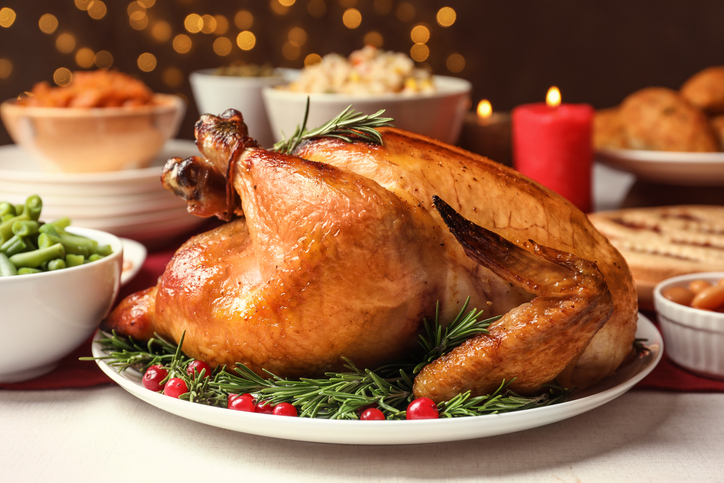
turkey

When we feel the holiday cheer right up to our esophagus

Every year, as soon as December rolls around, the same scenario repeats itself. We enjoy a Christmas dinner, then a few hours later, a familiar burning sensation rises up behind our breastbone. This is known as gastroesophageal reflux (GER) or, more commonly, heartburn, a very common, unpleasant discomfort [1,2]. Although a minority of people suffer from heartburn all year round due to a medical condition, about 30% to 40% of adults experience it occasionally [3]. Why are these festive celebrations so hard on our digestive system? The answer can often be found right on our plate… as well as in our mealtime habits.

Why does the festive season increase the occurrence of heartburn?

A European study focused on understanding why the festive season increases the occurrence of heartburn [4]. The researchers observed that it is mainly the richness and volume of meals that trigger most of the symptoms. They also found that it is not specific foods that cause heartburn, but rather a combination of dietary factors.

For example, the most calorie-rich menus were those that caused the most reflux, an effect primarily related to the amount of food consumed. Fattier meals, however, accentuated the feeling of being “too full” and of taking forever to digest.

Conversely, lighter meals consisting of lean meat, whole grains and vegetables caused the least discomfort. And, interestingly, no specific ingredient (cheese, chocolate or spices) was identified as a systematic trigger.

What causes heartburn? 

When we eat, food travels down our esophagus to our stomach. Between our esophagus and stomach is a small muscle “valve” called the gastroesophageal sphincter [1]. Its role is simple: it opens to let food pass through, then closes to prevent stomach acid from backing up.

When everything is working properly, this valve functions perfectly and we have no reflux or heartburn. What we call heartburn is a burning sensation that feels like it’s in your heart but isn’t really. Rather, it is the acidic contents of the stomach that move up into the esophagus, a much more sensitive area not designed to tolerate this acidity. During the holidays, many factors can disrupt this normally well-balanced system and allow a little acid to escape where it shouldn’t go.

Join the Biron community

Receive educational content, tips, and offers on health and wellness.

The hidden mechanism of heartburn

  1. When our stomach fills up too quickly, snacking throughout the evening or hearty meals stretch its walls like an overinflated balloon. This stretching increases the internal pressure and may push the valve (the gastroesophageal sphincter) causing it to open at the wrong time.
  2. When digestion slows down due to a fattier meal, gastric emptying occurs more slowly. The stomach then remains full longer, which prolongs internal pressure and creates conditions conducive to reflux.
  3. When abdominal pressure increases, whether from tight clothing, bending over quickly or lying down too soon after eating a big meal, an external pressure is exerted on the stomach. This compression mechanically pushes its contents upwards and increases the risk of reflux, even if the sphincter is working normally.
  4. Gastroesophageal sphincter tone can actually decrease under the effect of alcohol, which can make the barrier less tight. Soft drinks, very heavy meals and poor posture do not directly affect tone but increase the pressure in the stomach or cause temporary relaxation of the sphincter. It only takes a moment of relaxation for small amounts of acid to rise up into the esophagus.

Remedies that don’t work (and that should be avoided)

We often hear about various home remedies for heartburn, such as drinking a glass of warm milk, taking a spoonful of baking soda (sodium bicarbonate) dissolved in water, drinking chamomile tea, chewing a pinch of fennel seeds after a meal, or drinking cider vinegar diluted in water [5]. Yet, none of these solutions has proven to be effective in rigorous studies. Milk can even worsen symptoms, and bicarbonate produces a gas that causes bloating, sometimes enough to increase reflux. Herbal teas can help digestion but they don’t prevent acid from rising. In short, these remedies have a more reassuring effect than actually providing the sphincter with relief.

No one food in particular causes heartburn. It is the holiday combo! Below are some typical holiday situations that, when combined, create a perfect storm for heartburn [4].

  • High-fat foods: Tourtière, cheese, fondue, pâtés, yule logs, creamy dips, cold cuts… These foods are delicious but take longer to digest due to their fat content. They leave the stomach fuller longer, which increases the pressure and the feeling of being “too full”.
  • (Slightly overly) generous portions: Larger portions than usual, a second helping “to please your aunt”, buffets…As soon as your stomach stretches, it pushes on the valve, known as the sphincter.
  • Continual snacking: Canapés, appetizers, chocolates, sweet treats. When we eat all evening long, our stomach never has time to empty between mouthfuls. It constantly remains in “too-full” mode, which increases internal pressure and promotes acid reflux.
  • Late evening meals: Dinners after 8 p.m., desserts served at midnight, Christmas Eve snacks…and if, on top of that, we lie down less than 2–3 hours after eating, we greatly increase our chances of having heartburn.
  • Alcohol and carbonated drinks: Wine, beer, cocktails, champagne, alcohol can relax the sphincter, and the bubbles add gas to the stomach. Two perfect ingredients for late-night reflux.
  • Drinking a lot while eating: Water, wine, soup, cocktails… drinking too many liquids during a heavy meal puts even more pressure on the stomach.
  • Flopping down on the couch after dinner: Hunched back, compressed stomach… this position exerts abdominal pressure that mechanically pushes acid upwards.

Individual sensitivities, no universal culprits

Certain foods (tomatoes, citrus fruits, chocolate, mint, coffee or spicy foods) are often blamed for causing heartburn [3]. Studies show, however, that they do not automatically trigger reflux. Their effect varies greatly from person to person, and none has been identified as being systematically responsible. Actually, it is more the context in which they are eaten (rich, heavy, late meals or meals served with alcohol) that increases the risk. In other words, it is not the spicy appetizer or slice of Yule log that causes the problem, but the meal as a whole and habits surrounding it.

Simple habits to adopt to prevent heartburn

During the holidays, one of the most effective strategies is to let your hunger guide you when eating. Taking a few seconds to check whether you really are still hungry (or whether you are simply taking a second helping just because a dish is tasty, full of memories, or because your host is kindly insisting) helps to avoid overly generous portions that overload the stomach. Tasting and slowly savouring each mouthful also gives you time to digest your food properly.

Combining richer dishes with lighter foods helps the digestive system do its job more efficiently. Taking sips, especially non-carbonated drinks, limits stomach pressure, while alcohol is often better tolerated when consumed slowly, ideally between meals rather than during a heavy dinner.

After eating, remain seated with good posture, avoid bending over or compressing your stomach and wait a while before lying down or going to bed to greatly decrease the risk of nighttime reflux. With a few simple habits, you can enjoy the festivities to the fullest…without heartburn that sometimes ruins the end of the evening.

What about over-the-counter medications?

Some over-the-counter medications can help relieve occasional heartburn, such as antacids that temporarily neutralize acidity, or H2 blockers that reduce acid production. That said, not all of them are suitable for everyone. Some may interact with other treatments, worsen an underlying problem or mask important symptoms. This is why it is better to discuss this with your pharmacist, who can check your records, other medications and health status to recommend the safest option for your situation.

When should you consult a health care professional?

Holiday-related heartburn is usually not serious and disappears within a few hours. However, there are certain signs that you should not ignore. If your heartburn becomes more frequent, disrupts your sleep or is accompanied by difficulty swallowing, persistent vomiting, unintentional weight loss or blood in your stool, it is important to seek medical advice. Although it may sometimes resemble heartburn, unusual, intense chest pain that radiates to the neck, arm or jaw requires immediate medical assessment, as it may be the sign of a more serious condition. When in doubt, it is best to consult a health care professional.

Sources5
  1. Rolfes SR, Pinna K, Whitney E. Understanding normal and clinical nutrition. 12th ed. Boston: Cengage Learning; 2022.
  2. Armstrong D, Marshall JK, Chiba N, et al. Canadian Consensus Conference on the management of gastroesophageal reflux disease in adults - update 2004. Can J Gastroenterol. 2005;19(1):15-35. doi:10.1155/2005/836030
  3. Ness-Jensen E, Hveem K, El-Serag H, Lagergren J. Lifestyle Intervention in Gastroesophageal Reflux Disease. Clin Gastroenterol Hepatol. 2016;14(2):175-82.e823. doi:10.1016/j.cgh.2015.04.176
  4. Parker HL, Curcic J, Heinrich H, et al. What to eat and drink in the festive season: a pan-European, observational, cross-sectional study. Eur J Gastroenterol Hepatol. 2017;29(5):608-614. doi:10.1097/MEG.0000000000000829
  5. Zhang M, Hou ZK, Huang ZB, Chen XL, Liu FB. Dietary and Lifestyle Factors Related to Gastroesophageal Reflux Disease: A Systematic Review. Ther Clin Risk Manag. 2021;17:305-323. Published 2021 Apr 15. doi:10.2147/TCRM.S296680
Annie Ferland
Annie Ferland
PhD, PDt-Nutritionist
Annie Ferland is a dietitian-nutritionist, doctor of pharmacy, and the founder of ScienceFourchette.com, an independent online platform that explores nutrition from a scientific, accessible, and caring perspective. She also holds a master’s degree in kinesiology and a certificate in physical activity promotion from the University of South Carolina. She has also completed five years of postdoctoral education, including two in nutritional epidemiology and three in clinical nutrition at the University of Colorado in Denver. A member of the Ordre des diététistes-nutritionnistes du Québec, she is actively involved in advancing knowledge about nutrition and advocates for a scientific, accessible approach focused on the joys of eating.